

Surfer hats for dry-land beach days: fit and practical limits
Beach-town fans’ surfer hats are casual headwear with the aim of bringing a coastal story into everyday outfits—not a promise of performance in the water. For dry-land beach days in 2026, choose the design you want to wear, then check fit, coverage, care, and the limits of that particular hat.
- American Mandala surfer hats suit coastal outfits; choose verified fit details rather than assuming surf-ready performance.
- The Surfer Cowboy Distressed Cap pairs a surf-meets-Western story with a distressed cotton-twill shape.
- Compare caps and bucket hats by actual coverage, not just their beach-town look.
- Keep everyday coastal clothing separate from equipment intended for use in the water.
Why surfer hats matter for beach-town fans
A beach-day hat has to work beyond the beach photo. You might wear it during a drive, along the boardwalk, and over lunch without changing the rest of your outfit. The right choice belongs in your regular wardrobe, not just your vacation bag.
Start with the difference between a coastal look and a functional claim. A surf-inspired name tells you about a design’s story; it does not establish water suitability, wind retention, or a sun-protection rating. The guide to choosing between a trucker and a bucket hat is a useful next read if shape is your first sticking point.
American Mandala surfer hats are best for shoppers building everyday coastal outfits, not shoppers choosing equipment for surfing. That distinction keeps the shopping decision simple: buy the story for your wardrobe, and verify every practical requirement separately.
How to choose surfer hats for dry-land beach days
Start with the day you actually have planned
Before opening another product page, write down where you will wear the hat. A drive followed by a waterfront lunch is a different use case from sitting on exposed sand or getting into the water. Choose for the day you have, not the activity suggested by the word surfer.
Use a hat you already own as your starting point. Notice when you take it off, whether its brim interrupts your view, and whether you keep adjusting it. Those observations give you better shopping criteria than a vacation mood alone.
For your 2026 beach-day shortlist, separate appearance from function. You can love a coastal graphic and still decide that its hat shape does not suit the outing. A good design match does not cancel a practical mismatch.
- Name the main activity: driving, walking, sitting, or socializing.
- Decide whether the hat will stay on dry land throughout the day.
- Note whether you want a front brim or coverage around the head.
- Check how the hat works with your usual sunglasses.
- List any required function that needs explicit product confirmation.
Measure your fit before choosing a shape
Start manually with a flexible measuring tape and the fit instructions for the hat you are considering. Measure around the position where you intend to wear it, without pulling the tape tight. Take 2 measurements in centimeters and repeat if they disagree; this is a shopping check, not a substitute for the seller’s sizing directions.
Then compare those measurements with the actual listing. Do not assume that every cap adjusts, that every bucket hat uses the same sizing, or that a familiar style name guarantees a familiar fit. A hat’s silhouette and its sizing information answer different questions.
If you have a comfortable hat at home, use it as a physical reference. Notice where it sits above your ears and whether the crown feels shallow or roomy. Compare those features only when the new listing provides enough detail to do so.
- Follow the specific product’s measuring instructions.
- Record your measurement with its unit.
- Check the stated size or adjustment information.
- Look for crown and fit details rather than guessing from photographs.
- Keep your preferred hairstyle in mind when assessing fit.
Choose a design story you will wear again
Look through your existing clothing first. Pick out the tees, shorts, and layers you wear most often, then decide whether a hat should quietly finish those outfits or become their main graphic detail. This keeps the purchase connected to clothes you already enjoy.
For a surf-meets-Western direction, American Mandala’s Surfer Cowboy Distressed Cap has a distressed cotton-twill shape. Its supplied description connects coastal character with Western spirit. That is the reason to consider it—not an assumed technical benefit from the word surfer.
Best for: shoppers who want a coastal-Western accent for everyday outfits. Its limitation is equally clear: the design description does not establish water-use suitability, a retention system, or a sun-protection rating. Check the listing for any feature that matters to your intended use.
- Choose a story that fits your wardrobe, not just your destination.
- Compare the hat with a tee you already wear frequently.
- Decide whether the hat or shirt will carry the stronger visual theme.
- Read the fabric and fit information separately from the design description.
- Remove any option that depends on an unverified feature.
Build an outfit around one main story
Lay out 2 complete outfits before buying: one for the beach-town day and one for an ordinary day at home. If the hat works with both, you have a clearer reason to choose it. This check costs nothing and keeps your shortlist focused.
A simple starting point is a graphic hat, a plain top, and familiar shorts or trousers. If you prefer a graphic top too, look for a shared idea rather than assuming every detail needs to match. Coastal and Western references can sit together without turning the whole outfit into a costume.
For a warmer-day option, the Surfer Cowboy Tank brings the same surf-meets-Western story to a racerback shape. That makes it relevant to this outfit direction, but a shared name does not establish identical colors or a coordinated set. Compare the actual product images before deciding how closely you want the pieces to relate.
- Try the hat with a plain top first.
- Repeat the outfit with a graphic tee or tank you already own.
- Keep shoes and bottoms familiar while judging the new piece.
- Check the combination in a mirror rather than from separate thumbnails.
- Choose a second everyday outfit before committing.
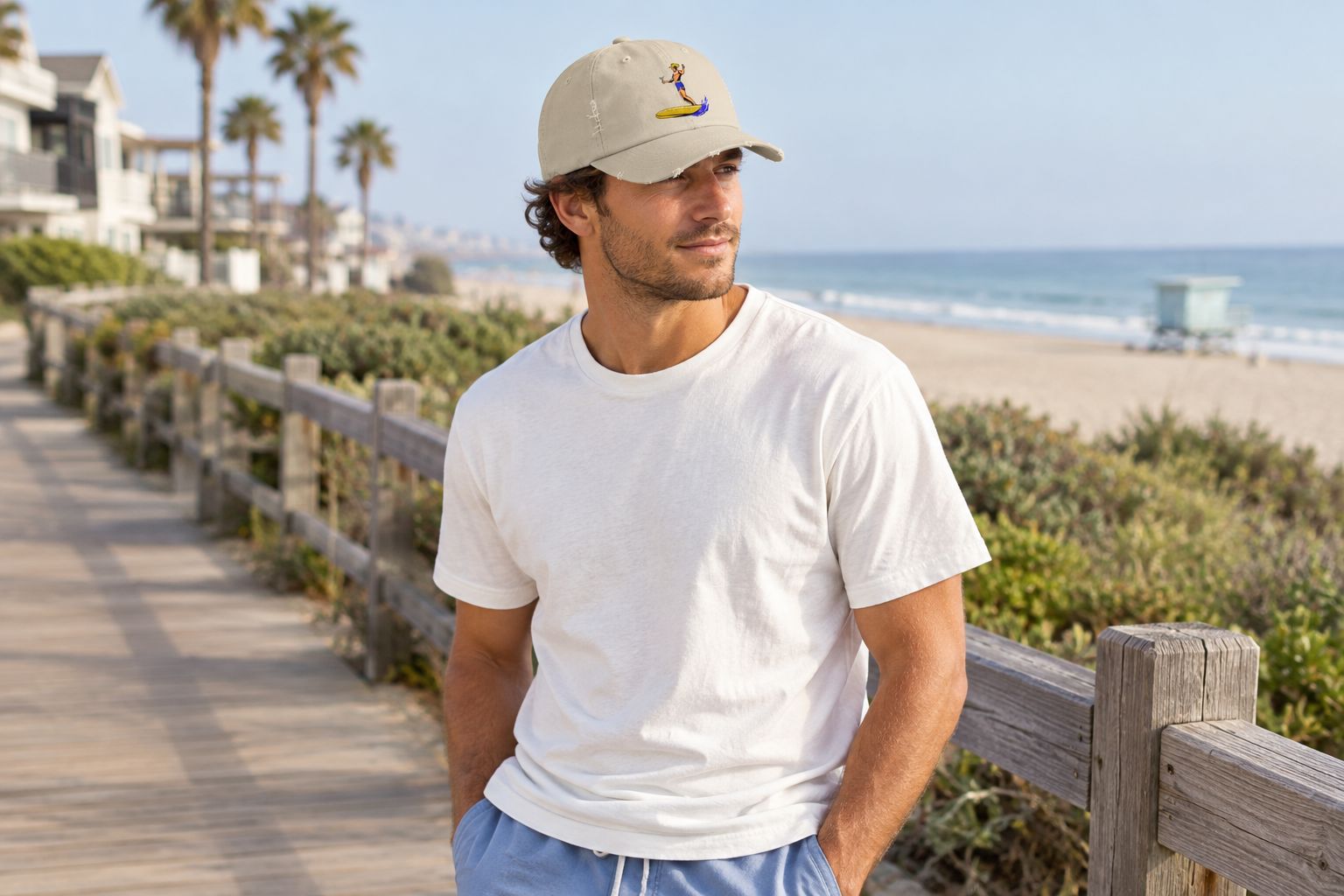
These American Mandala pieces are worth comparing if the coastal-Western story is what drew you in. The cap is best for adding that story through headwear; the tank is best for carrying it through a racerback top. Neither choice replaces checking the individual fit information, and neither is presented here as equipment for water use.


Check coverage without assuming protection
Try an existing cap and bucket hat if you have access to both. Look at the areas their brims cover in the position you actually wear them. A front brim and an all-around brim create different shapes, but the category name alone does not establish the coverage of a specific product.
For your 2026 purchase, treat a stated protection rating as a separate product fact. Do not infer one from dark fabric, a beach-themed graphic, or an outdoor photograph. A coastal hat is an outfit choice; any protective claim needs its own evidence.
Comfort matters here too. Move your head, look down, and put on your usual sunglasses. A hat that interrupts those ordinary actions is a poor match for your day, however much you like its design.
- Check the brim’s actual shape and stated dimensions when available.
- Notice which parts of your face and head remain uncovered.
- Read any protection claim exactly as written.
- Test the hat alongside your sunglasses when possible.
- Keep shade and other sun-protection measures separate from the outfit decision.
Plan care and packing before checkout
Read the care instructions before adding the hat to your bag. Do not transfer washing advice from an old cap to a new one, even when their shapes look similar. The relevant instructions belong to the product you are buying.
Packing deserves the same attention. Work out where the hat will go when you step indoors or take it off during the drive. Do not assume a brim can be folded or a crown can be crushed unless the product information supports that treatment.
Finish with 3 checks: fit, care, and intended use. For a 2026 weekend bag, those checks are more useful than adding another item simply because it shares the beach theme. Keep the hat’s job narrow and clear.
- Find the care directions before purchase.
- Check whether the listing addresses folding or packing.
- Choose a place to put the hat when it is not on your head.
- Avoid assuming resistance to saltwater, sweat, or repeated soaking.
- Recheck the current listing before ordering.
Compare the options for your beach-town day
This comparison separates design choices from functional requirements. The cap and bucket hat are shopping options for a dry-land outfit; an in-water hat belongs to a different decision and needs explicit information about its intended use.
| Option | Best for | Main reason to consider it | Key limitation |
|---|---|---|---|
| Surfer Cowboy Distressed Cap | Coastal-Western everyday outfits | Verified distressed cotton-twill shape and surf-meets-Western story | Its supplied description does not establish water-use performance or a protection rating |
| Sunday Funday Embroidered Bucket Hat | Shoppers who prefer a bucket-hat silhouette | A different shape to compare with a cap | Check the listing for sizing, fabric, care, and any functional claims |
| Surfer Cowboy Tank | Carrying the coastal-Western story through a top | Verified racerback shape | It is not headwear and does not answer your hat-fit requirements |
| A hat you already own | Testing the outfit before buying | A familiar reference for comfort and styling | Its fit and care instructions do not establish those of a new hat |
| A hat explicitly intended for in-water use | Shoppers planning to surf rather than stay ashore | Intended-use information addresses a different activity | A surf-themed name alone does not establish suitability |
Choose by the job first, then the story. A favorite graphic is a good reason to shortlist a hat; it is not a reason to ignore missing fit information or buy it for an activity its description does not support.
Common mistakes beach-town shoppers make
Treating surfer as a performance label
Surfer hats can describe a look rather than a technical category. Keep the dry-land outfit decision separate from any purchase for paddling, swimming, or surfing. Require explicit intended-use information for those activities.
Buying for the vacation photo alone
A hat can suit a beach backdrop and still feel wrong with your normal clothes. Use the two-outfit check before buying. If you cannot picture wearing it after the trip, reconsider whether the design belongs in your wardrobe.
Assuming distressed means ready for rough treatment
A distressed finish describes appearance; it does not provide care instructions. The Surfer Cowboy Distressed Cap’s cotton-twill description is not permission to soak, scrub, or machine-wash it. Follow the actual directions.
Making every piece tell the same story
You do not need a graphic hat, graphic top, and themed accessory in every outfit. Start with the piece you most want to wear, then let the rest support it. Matching is a preference, not a requirement.
FAQ
What are surfer hats for dry-land beach days?
Surfer hats for dry-land beach days are casual headwear chosen for coastal styling and everyday wear. A surf-inspired design does not by itself establish suitability for surfing or swimming.
Which American Mandala hat fits a coastal-Western outfit?
The Surfer Cowboy Distressed Cap fits a coastal-Western outfit direction. Its supplied description identifies a distressed cotton-twill shape and a surf-meets-Western story; check the listing separately for sizing and care.
Is a bucket hat better than a cap for a beach day?
Neither shape is automatically better for every beach day. Compare the specific hat’s fit, brim, care instructions, and intended use instead of deciding from the category name alone.
Can I wear the Surfer Cowboy Distressed Cap in the water?
The supplied product description does not establish that the Surfer Cowboy Distressed Cap is suitable for water use. Choose it for a dry-land outfit unless explicit product information supports your intended activity.
How do I check hat size before ordering online?
Measure your head according to the specific product’s instructions, then compare the result with its sizing information. Do not assume that every cap adjusts or that different hat styles use interchangeable sizing.
Do surfer hats provide rated sun protection?
A surfer-hat name does not establish a sun-protection rating. Read any rating and coverage information on the specific listing, and keep other sun-protection measures separate from your styling choice.
How do I wear a graphic surfer hat without overdoing the outfit?
Start with a plain top and familiar bottoms so the hat carries the main graphic story. Add another graphic piece only if you like how the actual designs work together.
One last thing
Before choosing a new hat for 2026, try your favorite outfit with the hat you already own. Pay attention to what you want to change: the shape, the fit, or the story. Those are different purchases.
Buy a new design when you want a new story; change the shape when the old shape does not work. That small distinction keeps a beach-town purchase useful long after the drive home.