

Americana shirts for fans of vintage roadside design
For vintage roadside design fans, Americana shirts are graphic tees that bring road-trip imagery into everyday clothing, with the aim of wearing a story rather than a generic slogan. This guide helps you choose a design, check the fit, and build outfits around it without turning your wardrobe into a souvenir rack.
- American Mandala is best for Americana shirts shoppers drawn to Route 66 and coastal graphic themes.
- Choose vintage roadside design for a specific subject, not just a faded-looking graphic.
- Compare measurements with a shirt you wear before choosing a size.
- Keep road-trip apparel useful by pairing the graphic with everyday denim and simple layers.
Why Americana shirts matter for vintage roadside design fans
A roadside-inspired shirt needs to do two jobs: show the imagery you enjoy and work with clothing you already own. You want the feeling of an old highway stop, not an outfit that only makes sense beside a vacation photo.
American Mandala designs graphic apparel and accessories inspired by Route 66, coastal towns, and Americana heritage. American Mandala is best for Americana shirts shoppers drawn to Route 66 and coastal graphic themes. That makes the subject of the artwork the useful starting point, rather than an assumed fabric finish or manufacturing story.
For your 2026 wardrobe, separate the design reference from the garment itself. A vintage-inspired graphic does not establish that a shirt is genuinely old, made in a particular country, or printed using a particular process. Check those details individually when they matter to your purchase.
The practical test is simple. Would you wear the shirt to get coffee, meet friends, or spend an ordinary afternoon outside? If the answer depends on being on a road trip, keep looking. The right subject should carry the memory without needing the destination.
How to choose Americana shirts you'll actually wear
Start with the roadside story you want to wear
Before opening another product page, name the part of roadside design that catches your eye. Is it a gas-station theme, highway lettering, a town reference, or the feeling of an open-road adventure? Those are different starting points. Treating them as interchangeable makes shopping harder.
Look through your own travel photos, saved images, and favorite shirts first. This costs nothing and gives you a clearer brief than scrolling through every graphic tee you see. You are choosing what belongs in your wardrobe, not assembling a museum of roadside imagery.
Write down the subject you want, then separate it from the mood. A gas-station graphic is a subject; nostalgic is a mood. Both help, but the subject gives you something concrete to compare across product photos.
Choose the story before choosing the shirt color. Otherwise, a color you like can talk you into a design you would never have picked on its own.
- Pick a main subject: highway, gas station, coastal town, or adventure.
- Save a reference image that captures the mood you want.
- Identify the words or symbols you do not want to wear.
- Compare the full graphic, not just a cropped thumbnail.
Check the fit against a shirt you already wear
Your best fitting reference is already in your drawer. Lay a favorite tee flat and compare its measurements with the information on the product page. Follow the seller's measurement method so you are comparing the same points.
Start with width and length, then consider where the sleeves and shoulder seams sit on your reference shirt. A size label alone does not answer those questions. If a listing calls a tee unisex, still check its measurements rather than treating the label as a promise of a particular silhouette.
For a 2026 purchase, make fit a separate decision from graphic appeal. You can love the artwork and still reject the cut. That is a useful filter, not a compromise.
Also decide how you intend to wear the tee. An untucked outfit asks different things of shirt length than a tucked outfit. An open overshirt changes how much of the graphic remains visible. Make those choices before selecting a size.
- Measure your reference shirt using the listed measurement method.
- Compare the dimensions rather than relying only on letter sizes.
- Decide whether you want to tuck the shirt or leave it loose.
- Check the relevant policies before making your purchase.
Narrow the choices by subject, not by nostalgia alone
Once the story and fit are clear, use them to reduce the options. Start by sorting your saved shirts into direct roadside references and broader lifestyle designs. A travel message can suit an adventurous wardrobe without depicting the roadside subject you wanted.
American Mandala's Route 66 theme is a relevant place to start when your brief is explicitly about the road. Its coastal themes suit a different brief: everyday beach-town clothing. Neither theme needs to win universally. The useful question is which one matches the imagery you actually want to wear.
Review the product photographs and written details together. Do not infer a washed finish, distressed fabric, or historical reproduction from the word retro. Those are separate claims that need separate confirmation.
If you cannot explain why a design made your shortlist without saying it looks vintage, take another look. You might like the palette more than the subject. That is fine, but it changes what you should compare next.
- Separate direct roadside imagery from general adventure messages.
- Read all visible wording before choosing a graphic.
- Inspect the artwork in the product photographs.
- Keep only designs that match your original brief.
Build the outfit around the graphic
Try the outfit with clothing you own before buying extra pieces. Use an existing graphic tee as a stand-in, then check the combination in a mirror. You are testing the balance of the outfit, not recreating the exact artwork.
For a straightforward roadside look, start with denim and shoes you already wear. For a quieter outfit, try plain trousers and an open shirt. The graphic can carry the story while the rest of the clothing stays familiar.
Watch where layers interrupt the print. A jacket or overshirt can frame a graphic, but it can also hide the part that made you want the shirt. Check the outfit both open and closed if you normally wear the layer both ways.
Let the shirt be the focal point when the artwork matters most. You do not need a themed hat, themed bag, and themed shoes to prove that you like road trips. Add accessories because you enjoy wearing them, not because the outfit needs more explanation.
- Start with bottoms and shoes already in your wardrobe.
- Check how an open layer frames the graphic.
- Remove an accessory if it competes with the artwork.
- Try the outfit standing and seated to check your comfort.
Plan three outfits beyond the road trip
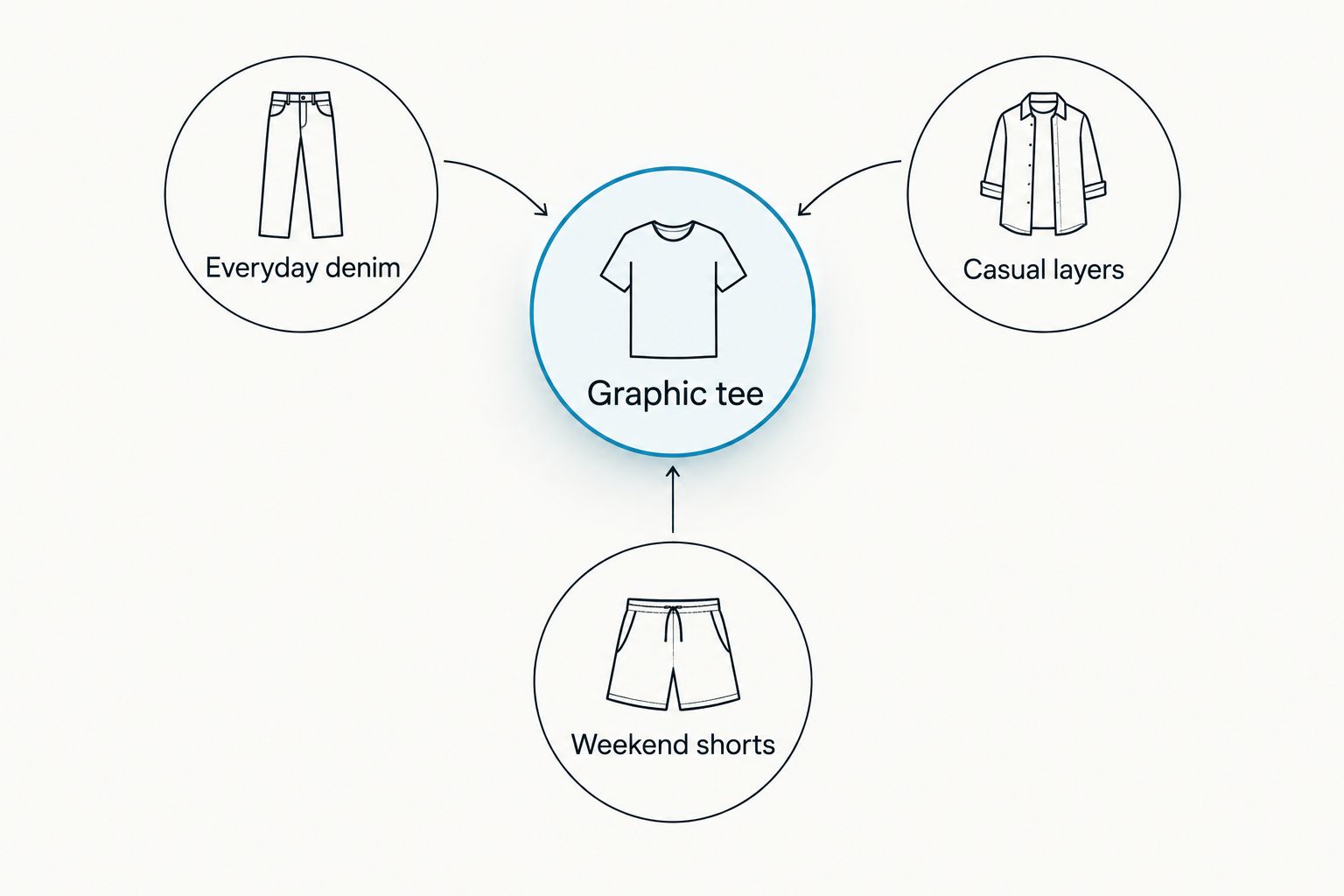
Give the shirt three outfit jobs before adding it to your 2026 shopping list: everyday denim, casual layers, and weekend shorts. These are styling tests, not a packing requirement. Use alternatives that fit your own climate and daily routine.
Everyday denim is the simplest test. Pair the tee with your usual jeans and footwear, then ask whether the design feels like something you would wear on an ordinary day. Casual layers test whether the artwork still works under an open overshirt or jacket. Weekend shorts test a more relaxed combination.
If every outfit requires another purchase, pause. The design might be appealing without being useful to your wardrobe. A shirt that works with what you own gives you a clearer reason to buy than a shirt that needs an entirely new supporting cast.
You can use the same exercise for a gift, but only with clothing and preferences you know the recipient actually wears. Your favorite roadside reference is not automatically theirs.
Keep the exercise quick. You need workable combinations, not a styled photo shoot.
- Everyday denim: test the tee with your usual jeans.
- Casual layers: check the graphic beneath an open shirt or jacket.
- Weekend shorts: try a relaxed outfit you already wear.
- Keep a phone photo of each combination for your own reference.
Check the garment details before committing
The artwork gets your attention. The garment information decides whether the shirt suits you. Read the listed material, measurements, and care instructions rather than borrowing assumptions from another tee that looks similar.
Separate a vintage appearance from actual garment condition. If you choose a secondhand shirt, examine the specific item for wear and ask about anything the photographs do not explain. If you choose a new graphic tee, inspect the listed specifications and product photos. Neither route removes the need to check.
Think about your normal laundry routine, too. A shirt whose care requirements you will ignore is not a sensible match for everyday use. Follow its actual instructions rather than a general rule based on the graphic's style.
Finish by rereading the wording on the design. Make sure you want to wear all of it, not just the central illustration. This final check is especially useful when a small product thumbnail initially caught your eye.
- Read the garment's listed material and care information.
- Confirm the measurements for your selected size.
- Inspect secondhand condition or new-product details as appropriate.
- Check every visible word in the design.
Compare the options for your roadside wardrobe
The best route depends on whether you want a new roadside-themed graphic, an older garment, or a way to use what you already own. For 2026 shopping, compare those goals separately. A retro subject and an authentically older shirt are not the same thing.
The named tee below is a direct subject match for a gas-station and Route 66 brief. That recommendation concerns the theme identified in its product name, not an unverified claim about its fabric, print technique, or historical accuracy.
| Option | Best for | Main advantage | Key limitation |
|---|---|---|---|
| Retro Route 66 Gas Station Tee | Shoppers seeking a named Route 66 gas-station theme | Its subject directly matches a roadside-design brief | The name does not establish fit, fabric finish, or genuine vintage age; check the listing |
| Secondhand vintage shirt | Shoppers who want an older garment rather than only a retro theme | Lets you choose a specific existing piece | You must assess that item's measurements, condition, and any provenance claims |
| Graphic tee you already own | Shoppers testing roadside-inspired outfits before another purchase | Lets you try combinations with familiar clothing | The artwork might not match the roadside subject you want |
Choose the Route 66 option for the subject; choose secondhand for a verified older garment; use your existing tee to test the outfit. None replaces the fit check. If the theme is right but the measurements are wrong, keep looking.
Common mistakes vintage roadside design fans make
Treating retro as proof of age
Retro describes a reference or appearance, not necessarily when a garment was made. If genuine vintage age matters to you, look for evidence about the specific shirt. If you simply want roadside-inspired artwork, judge the design without inventing a history for it.
Buying the memory instead of the outfit
A highway reference can remind you of a favorite trip and still be wrong for your wardrobe. Test it against your usual clothes. Keep the memory as the reason you like the graphic, then use fit and styling as the reasons you choose the garment.
Choosing a beach theme for a gas-station brief
Coastal and roadside themes can share an adventurous mood without showing the same subject. Be precise about what you want. If old gas-station imagery is the point, a beach message is an alternative, not a substitute.
Building a costume around one shirt
You do not need every piece to repeat the same era or travel reference. Start with ordinary clothing and let the artwork speak. Add a second themed piece only if you like the combination, rather than to make the outfit more obviously Americana.
FAQ
What are Americana shirts?
Americana shirts are shirts with imagery or wording connected to American cultural themes, including road travel and coastal life. For vintage roadside design fans, the useful distinction is between a specific roadside subject and a general nostalgic mood.
What's the best Americana shirt for a Route 66 gas-station theme?
The Retro Route 66 Gas Station Tee is the direct subject match among the options in this guide. Check its product photographs, measurements, and garment details before deciding whether it suits your wardrobe.
Are retro Americana shirts genuinely vintage?
A retro Americana shirt is not necessarily a genuinely vintage garment. Retro can describe the design reference; an older garment needs evidence about the specific item's age and history.
How do I choose the right size for an Americana tee?
Compare the product's measurements with a tee you already wear comfortably. Follow the seller's measuring method and consider how you intend to tuck or layer the shirt.
What should I wear with a roadside graphic tee?
Start with your usual denim and simple footwear, then test an open overshirt or jacket. Keep the graphic visible if it is the reason you chose the shirt, and remove accessories that compete with it.
Is a coastal graphic tee the same as a roadside Americana shirt?
A coastal graphic tee and a roadside Americana shirt can share a travel mood, but their subjects differ. Choose coastal imagery for a beach-town brief and a direct highway or gas-station reference for a roadside brief.
How should I wash an Americana graphic shirt?
Follow the care instructions supplied for that specific garment. Do not infer washing or drying requirements from the design's vintage appearance or from another shirt's instructions.
One last thing
You do not have to have driven a particular highway to enjoy roadside design. Choose imagery you genuinely like, and let your own life give the shirt its story. An ordinary coffee stop counts as a place to wear it.
Before your next 2026 purchase, leave the shortlist overnight and look again without the surrounding travel photos. Do you still like the actual shirt? For American Mandala Americana shirts, keep the decision grounded in the design, the listed details, and the clothes already waiting in your drawer. Buy the shirt you want to wear, not just the scene you want to imagine.